

Melbourne's Finest: A recap of the 2021 Australian Open
- Pranav Prasanna

- Feb 25, 2021
- 4 min read

Melbourne marvels Djokovic's dominance, while tennis has found a new superstar in Naomi Osaka.
The salient lesson for sport over the past couple of months is that the ties between fans and sport are inseparable. Only Tennis Australia knows the sleepless nights, the curveballs, and the crazy logistical challenges faced in hosting the 2021 Australian Open.
It has been 43 years since an Australian won their home Grand Slam, and while that wait continues with Ash Barty's shock exit, Melbourne and Victorians can be proud of this year's Australian Open.
Novak Djokovic felt right at home, successfully defending the Norman Brooks trophy against Danil Medvedev, and won his 18th career Grand Slam title. Naomi Osaka won the women’s Australian Open title after beating Jennifer Brady. Having recently ended Serena William's latest quest for Grand Slam No. 24, Osaka has marked herself down as both the present and future figure of tennis.
Carlos Alcaraz: Breakthrough player of the tournament
Carlos Alcaraz enters as a new member of the elite, making great strides in his tennis journey. The 17-year-old Spaniard broke new ground by winning his first Grand Slam singles match 6-1, 6-4, 6-4 against Dutch Botic van de Zandschulp. An inspired Alcarez cherishes being mixed in the locker room amongst his heroes and has received high praise from 20-time Grand Slam Champion Rafael Nadal, who said: “He has intensity. He has the passion. He has the shots, and he's always the same in my opinion. He has all the ingredients to become a great champion.”
Quarantine chaos
The build-up to the Australian Open was a bumpy ride. Social media and the Australian media were abuzz with Tennis Australia's COVID arrangements. Some narratives portrayed tennis players as entitled and distant from reality, while several tennis players expressed their discomforts and lack of facilities while living in the bubble. Amongst those who complained was Spaniard Roberto Bautista Agut who called his room 'a prison', Yulia Putintseva, and Novak Djokovic called for a list of needs of the players to be met by Tennis Australia.
Nick Kyrgios is a box-office tennis player.
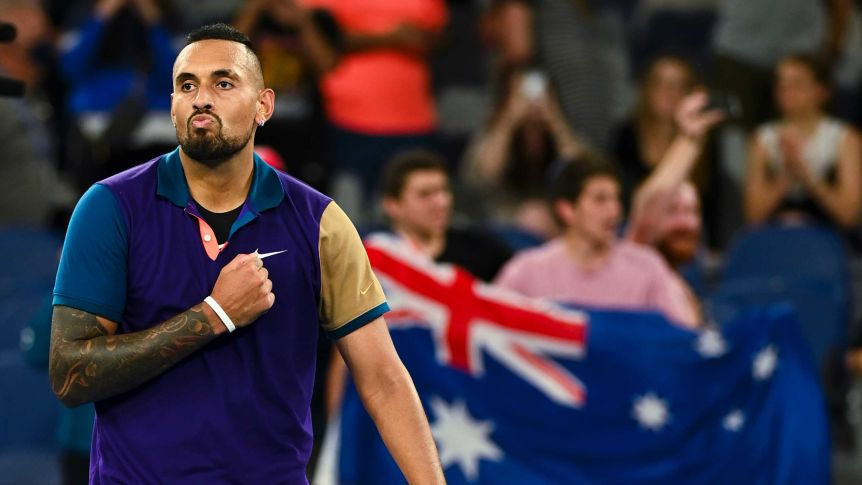
This year’s Australian Open was another reminder of the 25-year-old’s extraordinary pulling power. Across the tournament, one thing stood out - Kyrgios holding his own in long matches. The Australian beat France's 29th-seed Ugo Humbert 5-7, 6-4, 3-6, 7-6, 6-4 in the second round at John Cain Arena. It was a match showcasing the best and the worst of a grinning and cursing Kyrgios, and ensured pure entertainment.
Playing freewheeling tennis, a limping Kyrgios fed off the crowd's energy-producing brilliant 'tweeners, and his staple fare of underarm serves. His road to a Grand Slam title was cut short with his loss to Austrian Dominic Thiem 6-4, 6-4, 3-6, 4-6, 4-6 in the third round. Make no mistake, tennis needs characters and surely, Nick Kyrgios.
Jennifer Brady is here to stay, and win.
Appearing in her first Grand Slam final, the 25-year-old American started slowly against Naomi Osaka, but rallied to go down fighting 3-6, 4-6. In defeat, Jennifer Brady showed a champion's glow and proved she's here to contest for more titles. Regardless of the result in the finals, it is now known that Brady does not go away. Known to be one of the hardest workers in the Women's division, a valiant Brady is sure to fight for more than just participation medals.
Age is just a number.
Every now and then, athletes young or old create waves across the sporting world, when no one has expected them to, or they are not meant to. In the unpredictable world of Women's Tennis, it was the turn of Hseih Su-Wei to enter uncharted territory. The world took notice.
The 35-year-old tennis star's conventional wisdom proved useful as players in the likes of US Open quarter-finalist Tsvetana Pironkova, eighth seed Bianca Andreescu, Sara Errani, and Marketa Vondrousova fell victim to Su-Wei's brilliant Australian Open run. Originating from Taipei, Su-Wei is described as a free spirit and became the oldest woman in the Open era to debut in the quarterfinals of a Grand Slam.
Hsieh broke through at the highest level of tennis when she won the Wimbledon Doubles in 2014 with China’s Peng Shuai. The pair won the French Open the following year. Then, with Barbora Strycova she won a second Wimbledon Doubles title in 2019 and ended the year 2020 ranked as world No.1 in Women's Doubles.
The Butterfly Effect
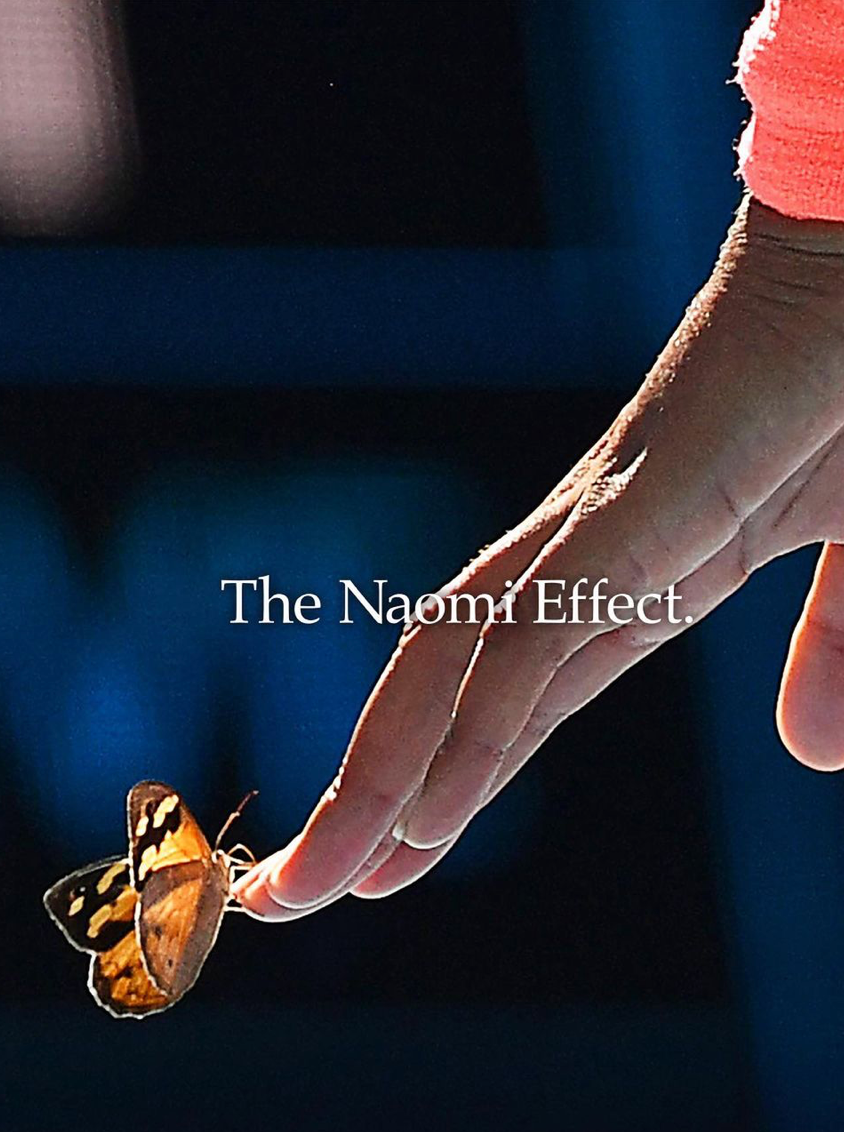
Naomi Osaka's maiden Grand Slam rocked the Women's tennis division. Expectations skyrocketed and Women’s tennis had a new boss. After her fourth Grand Slam victory, the Japanese talent aims to replicate her form every week across all surfaces to assert an all-surface dominance. Her potential is highly spoken off but getting used to the “natural surfaces” will require more work. And every loss along that journey is a lesson to learn from.
Osaka essentially ranks as a hard-court specialist, but the player has been vocal about her discomforts on playing on a grass surface and feels unsure of her footing and gets irritated by the lower, inconsistent bounce. While a clay court or grass major might glam up her CV, one can imagine a Naomi Osaka v Ashleigh Barty contest to be the duel of the future for Women's Tennis.
On cloud 9
Come rain or shine, rest assured that Novak Djokovic will deliver down under. Holding off early pressure from challenger Daniil Medvedev, Djokovic secured his record-ninth Australian Open title, winning the match 7-5, 6-2, 6-2. After a nervous first set, what ensued was a classic Novak display of some of the best tennis. Known as one of the best returners on tour, Djokovic spent the next few games tearing apart Medvedev's huge serves and broke serve seven times in the match and breaking Medvedev's confidence along the way.
Accounting for 5 Australian Open title defenses in the open era, Djokovic begins his 311th week as the world number one tennis player and is set to surpass Roger Federer as the record holder. This Australian Open final was a masterful demonstration of how wide the gap still is between the big 3 (ie. Roger Federer, Rafael Nadal, and Novak Djokovic) and the rest of the men's roster.


Comments